Saturday, June 8, 2013

BARBAROSSA- HITLER'S MISCONCEPTION CONQUERING RUSSIA PART3

BARBAROSSA-  HITLER'S POLICY TOWARDS THE UNITED STATES
PART 3
Adolf Hitler's reckless promise to Japan had been made during a series of talks in Berlin with Yosuke Matsuoka, the pro-Axis Japanese  Foreign Minister, in the spring of 1941 just before the German attack on Russia. The captured German minutes of the meeting enable us to trace the development of another one of Hitter's monumental miscalculations. They and other Nazi documents of the period show the Führer too ignorant, Göring too arrogant and Ribbentrop too stupid to comprehend the potential military strength of the United States, a blunder which had been made in Germany during the First World War by Wilhelm II, Hindenburg and Ludendorf. There was a basic contradiction from the beginning in Hitler's policy toward America. Though he had only contempt for her military prowess he endeavoured during the first two years of the conflict to keep her out of the war. This, we have seen, was the main task of he German Embassy in Washington, which went to great lengths, including the bribing of Congressmen, attempting to subsidize writers and aiding the American First Committee, to support the American isolationists and thus help to keep America from joining Germany's enemies in the war.
That the United States, as long as it was led by President Roosevelt, stood in the way of Hitler's grandiose plans for world conquest and the dividing up of the planet among the Tripartite powers the Nazi dictator fully understood, as his various private utterances make clear. The American Republic, he saw, would have to be dealt with eventually and, as he said "severely". But one Nation at a time. That had been the secret of his successful strategy so far. The turn of America would come, but only after Great Britain and he Soviet Union had been struck down. Then, with the aid of Japan and Italy, he would deal with the upstart Americans, who, isolated and alone, would easily succumb to the power of the victories Axis. japan was the key to Hitler's efforts to keep America out of the war until Germany was ready to take her on. Japan, as Ribbentrop pointed out to Mussolini on March 11, 1940, possessed the counterweight to the United States which would prevent the Americans from trying to intervene in Europe against Germany as they had in the first world war.
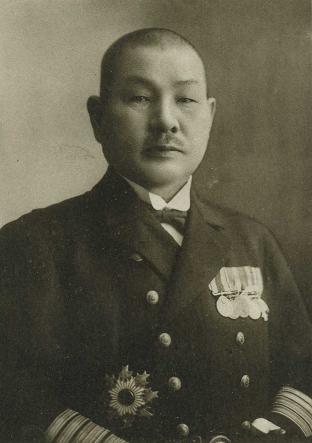
'Matsuoka visits Hitler (March 1941, Matsuoka subsequently drifted into obscurity and lived in retirement through the war years. Following the surrender of Japan, he was arrested by the Supreme Commander of the Allied Powers in 1945 and held at Sugamo Prison. However, he died in prison in 1946 before his trial on war crimes charges came up before the International Military Tribunal for the Far East.
In their wartime dealings with the Japanese, Hitler and Ribbentrop at first stressed the importance of not provoking the United States to abandon her neutrality. By the beginning of 1941 they were exceedingly anxious to draw  Japan into the war, not against America, not even against Russia which they were shortly to attack, but against Britain which had refused to give in even when apparently beaten. Early in 1941 German pressure on Japan stepped up. On February 23, Ribbentrop received at his stolen estate at Fuschl, near Salzburg, the fiery and hot-tempered Japanese ambassador General Hiroshi Oshima, who had often  impressed others as more Nazi than the Nazis, Though the war, Ribbentrop told his guest, was already won, Japan should come in "as soon as possible, in its own interest," and seize Britain's empire in Asia. A surprise intervention by Japan, he continued, was bound to keep America out of the war. America, which at present is not armed and would hesitate to expose her Navy to any risks west of Hawaii, could do this even less in such a case. If Japan would otherwise respect the American interests, there would not even be the possibility for Roosevelt to use the argument of lost prestige to make war plausible to the Americans. It was unlikely that America would declare war if it had to stand by while Japan took the Philippines. But even if the United States did get involved, Ribbentrop declared "this would not endanger the final victory of the countries of the Three-Power Pact." The Japanese fleet would easily defeat the American fleet and the war would be brought rapidly to an end with the fall of both Britain and America. This was heady stuff for the fire-eating Japanese envoy and Ribbentrop poured it on. He advised the Japanese to be firm and use "plain language" in their negotiations in Washington.
Only if the U.S. realized that they were confronting firm determination would they hold back. The people in the U.S.A.... were not willing to sacrifice their sons, and therefore were against any entry into the war. The American people felt instinctively that they were being drawn into war for no reason by Roosevelt and the Jewish wire-pullers. Therefore our policies with the U.S. should be plain and firm...
The Nazi Foreign Minister had one warning to give, the one that had failed so dismally with Franco: If Germany should ever weaken, Japan would find itself confronted by a world coalition within a short time. We were all in the same boat. The fate of both countries was being determined now for centuries to come...  A defeat of Germany would also mean the end of the Japanese imperialist idea.
To acquaint his military commanders and the top men in the Foreign Office with his new Japanese policy, Hitler issued on March 5, 1941, a top-secret directive entitled "Basic Order No. 24 Regarding Collaboration with Japan."
'It must be the aim of the collaboration based on the Three-Power Pact to induce Japan as soon as possible to take active measures in the Far East. Strong British forces will thereby be tied down, and the centre of gravity of the interest of the United States will be diverted to the Pacific. The conman aim of the conduct of war is to be stressed as forcing England to her knees quickly and thereby keeping the United States out of the war. The seizure of Singapore as the key British position in the Far East would mean a decisive success for the entire conduct of war of the Three-Powers.
A flight of RAAF Avro Lincoln bombers overflying Singapore Naval Base, June 1953.'
Hitler also urged the Japanese seizure of other British naval bases and even American basis, "if the entry of the United  States into the war cannot be prevented." He concluded by ordering that "he Japanese must not be given an intimation of the Barbarossa operation." The Japanese Ally, like the Italian, was to be used to further German ambition, but neither government would be taken into the Führer's confidence regarding his intention to attack Russia. A fortnight later, on March 18, at a conference with Hitler, Keitel and Jodl, Admiral Raeder strongly urged that Japan be pressed to attack Singapore. The opportunity would never again be so favourable, Raeder explained, what with "the whole English fleet contained, the preparedness of the U.S.A. for war against Japan and the inferiority the U.S. fleet compared to the Japanese." The capture of Singapore, the Admiral said, would "solve all the other Asiatic questions regarding the U.S.A. and England' and would of course enable Japan to avoid war with America, if she wished. There was only one hitch, the Admiral opined, and mention of it must have Hitler frown. According to naval intelligence, Raeder warned, Japan would move against the British in South-east Asia only "if Germany proceeds to land in England." There is no record in the Navy minutes of this meeting indicating what reply Hitler made to this remark. Raeder said something else that the Führer did not respond to. He "recommended" that Matsuoka "be advised regarding the designs on Russia."
The Japanese Foreign Minister was now on his way to Berlin via Siberia and Moscow, uttering bellicose pro-Axis statements, as Secretary of State Hull put it, along the route.(Hull made the remark to the new Japanese ambassador in Washington in the presence of Mr, Roosevelt on March 14. Nomura replied that Matsuoka "talked loudly for home consumption because he was ambitious politically,sic)
Nomura (left) and Kurusu (right) meet Hull for the last time on 17 November 1941, two weeks before the attack on Pearl Harbour (7 December 1941)' [After World War II, Nomura denied that he knew beforehand of the attack on Pearl Harbour. Reportedly Nomura and Kurusu had to personally decode the radioed message of Japan's breaking off the negotiations with the United States (which given the circumstances practically meant war), as it had been sent from Japan on Monday, December 8 and was received when the embassy's technical support staff was still on Sunday holiday. Nomura stated that this is why he had been unable to deliver the message until after the actual attack had taken place. In his memoirs, Hull credited Nomura with having been sincere in trying to prevent war between Japan and the USA, sic]
The arrival of Matsuoka in the German capital on March 26 came at an awkward moment for Hitler, for that night the pro-German Yugoslav government was overthrown in the Belgrade coup and the Führer was so busy improvising plans to crush the obstreperous Balkan country that he had to postpone seeing the Japanese visitor until the afternoon of the twenty-seventh. Ribbentrop saw him in the morning, playing over, so to speak, the old gramophone records reserved for such guests on such occasion, though managing to be even more fatuous than usual not allowing the dapper little Matsuoka to get in a word. The lengthy confidential minutes drawn up by Dr. Schmidt leave no doubt of that. "The war has already been definitely won by the Axis," Ribbentrop announced, "and it is only s question of time before England admits it." In the next breath he was urging a "quick attack upon Singapore" because it would be "a very decisive factor in the speedy overthrow of England." In face of such a contradiction the diminutive Japanese visitor did not bat an eye. "He sat here inscrutably," Schmidt later remembered, " in no way revealing how these curious remarks impressed him." As to America:
There was no doubt (Ribbentrop said) that the British would long since have abandoned the war if Roosevelt had not always given Churchill new hope...The There-Power Pact had above all had the goal of frightening America and keeping it out of the war... America had to be prevented by all possible means from taking an active part in the war and from making its aid to England too effective...The capture of Singapore would perhaps be most likely to keep America out of the war because the United States could scarcely risk sending its fleet into Japanese waters... Roosevelt would be in a very difficult position...
Though Hitler had laid down that Matsuoka not be told about he impending German attack on Russia, a necessary precaution to keep the news from leaking out, but nevertheless, as we shall see, one that would have disastrous consequences for Germany, Ribbentrop did drop several broad hints. Relations with the Soviet Union, he told his visitor, were correct but not very friendly. Moreover, should Russia threaten Germany, "the Führer would crush Russia." The Führer was convinced, he added, that if it came to war "there would be in few months no more Russia." Matsuoka, says Schmidt, blinked at this and looked alarmed, whereupon Ribbentrop hastened to assure him that he did not believe that "Stalin would pursue an unwise policy."[Japan and Russia had signed a Neutrality Pact,sic] At this juncture, says Schmidt, Ribbentrop was called away by Hitler to discuss the Yugoslav crisis and failed even to return for the official lunch which he was supposed to tender the distinguished visitor.

Japanese Foreign Minister Matsuoka signing the Soviet-Japanese Neutrality Pact, 13 Apr 1941, note Molotov and Stalin in background'
In the afternoon Hitler, having determined to smash another country (Yugoslavia), worked on the Japanese Foreign Minister. "England has already lost the war," he began. "it is only a matter of having the intelligence to admit it." Still, the British were grasping at two straws: Russia and America. Toward the Soviet Union Hitler was more circumspect than Ribbentrop had been. He did not believe, he said, that the danger of a war with Russia would arise. After all Germany had some 160to 170 Divisions "for defence against Russia." As to the United States:
America was confronted by three possibilities:she could arm herself, she could assist England she could wage war on another front. If she helped England she could not arm herself. If she abandoned England the latter would be destroyed and America would then find herself fighting the powers of the Three-Power Pact alone. In no case , could America wage war on another front. Therefore, the Führer concluded, "never in human imagination" could there be a better opportunity for the Japanese to strike in the Pacific than now. "Such moment," he said, laying it on thickly as he could, "would never return. It was unique in history." Matsuoka agreed, but reminded Hitler that unfortunately he "did not control Japan. At the moment he could make no pledge on behalf of the Japanese Empire that it would take action." But Hitler, being absolute dictator , could make a pledge and he made it to Japan, quite casually and without being asked to, on April 4, after Matsuoka had returned to Berlin from seeing Mussolini. This second meeting took place on the eve of the Nazi attack on two more innocent countries, Yugoslavia and Greece, and the Führer, thirsting for further easy conquests and for revenge on Belgrade, was in one of his warlike moods. While he considered war with the United States "undesirable", he said, he had "already included it in his calculations." But he did not think much of America's military power. [Hitler had come to believe his own Nazi propaganda, sic]
Germany had made her preparations so that no American could land in Europe. Germany would wage a vigorous war against America with U-boats and the Luftwaffe, and with her greater experience...would be more than a match for America, entirely apart from the fact that German soldiers were, obviously, far superior to the Americans. This boast led him to make the fateful pledge. Schmidt recorded it in his minutes: "if Japan got into conflict with the Unites States, Germany on her part would take the necessary steps at once.' From Schmidt's notes it is evident that Matsuoka did not quite grasp the significance of what the Führer was promising, so Hitler said it again: 'Germany, as he had said, would promptly take part in case of a conflict between Japan and America.'

DECEITFUL POLITICAL MANOEUVRING
Hitler paid dearly not only for this assurance, so causally given, but for his deceit in not telling the Japanese about his intention to attack Russia as soon as the Balkans were occupied. Somewhat coyly Matsuoka had asked Ribbentrop during a talk on March 28 whether on his return trip he "should remain in Moscow in order to negotiate with the Russians on the Non-aggression Pact or the Treaty of Neutrality." [In fact he did not inform Ribbentrop either that he would sign the Neutrality Pact in Moscow, sic]. The dull-witted Nazi Foreign Minister replied smugly that Matsuoka "if possible should not bring up the question in Moscow since it probably would not altogether fit into he framework of the present situation." He did not quite grasp the significance of what was up. But by the next day it had penetrated his wooden mind and he began the conversation that day by referring to it. First of all he threw in, as casually as Hitler would do on April 4, a German guarantee that if Russia attacked Japan "Germany would strike immediately." He wanted to give this assurance, he said, " so that Japan  could push southward toward Singapore without fear of any complications with Russia." When Matsuoka finally admitted that while in Moscow on his way to Berlin he himself had proposed a non-aggression pact with the Soviet Union and hinted that the Russians were favourably inclined toward it, Ribbentrop's mind again became somewhat of a blank. He merely advised that Matsuoka to handle the problem in a "superficial way." But as soon as the Nipponese Foreign Minister was back in Moscow on his trip home, he signed a treaty of neutrality with Stalin which, as Ambassador von der Schulenburg, who foresaw the consequences, wired Berlin, provided for each country to remain neutral in case the other got involved in the war. This was one treaty, it was signed on April 13, which Japan honoured to the very last despite subsequent German exhortations that she disregard it. For before the summer 1941 was out the Nazis would be begging the Japanese to attack not Singapore or Manila but Vladivostok!

View of Vladivostok and the Golden Horn Bay
At first however, Hitler did not grasp the significance of the Russo- Japanese Neutrality Pact. In April 20 he told Admiral Raeder, who inquired about it, that it had been "made with Germany's acquiescence" and that he welcomed it "because Japan is now restrained from taking action against Vladivostok and should be induced to attack Singapore instead. At this stage Hitler was confident Germany could destroy Russia during the summer. He did not want Japan to share in this mighty feat any more than he had desired that Italy should share in the conquest of France.  And he was absolutely confident that Japanese help would not be needed. Ribbentrop, echoing his master's thoughts, had told Matsuoka on March 29 that if Russia forced Germany "to strike" he would "consider it proper if the Japanese Army were prevented from attacking Russia." But the views of Hitler and Ribbentrop on this matter changed very suddenly and quite drastically scarcely three months later. Six days after the German armies were flung into Russia, on June 28, 1941, Ribbentrop was cabling the German ambassador in Tokyo, General Eugen Ott, to do everything he could get the Japanese to promptly attack Soviet Russia and also to argue that this was the best way of keeping America neutral. It maybe expected (Ribbentrop explained) that the rapid defeat of Soviet Russia, especially should Japan take action in the East, will prove the best argument to convince the United States of the utter futility of entering the war on the side of a Great Britain entirely isolated and confronted by the most powerful alliance in he world.
Matusoka was in favour of immediately turning on Russia, but his views were not accepted by the government in Tokyo, whose attitude seemed to be that if the Germans were rapidly defeating the Russians, as they claimed, they needed no help from the Japanese. However, Tokyo, was not so sure about a lightning German victory and this was the real reason for its stand.But Ribbent5rop persisted. On July 10, when the German offensive in Russia was really beginning, to roll and even Halder, as we have seen, thought that victory already had been won, the Nazi Foreign Minister got off from his special train on the Eastern front, a new and stronger cable was sent to his ambassador in Tokyo.[Ribbentrop kept trying all that fall and several times during the next two years to induce  the Japanese to fall upon Russia from the rear, but each time the Tokyo government replied politely, "so sorry, please."sic] 'Since Russia, as reported by he Japanese ambassador in Moscow, is in effect close to collapse... its simply impossible that Japan does not solve the matter of Vladivostok and the Siberian area, as soon as her military preparation are completed...I ask you to employ all available means in further insisting upon Japan's entry into the war against Russia the soonest possible date... The sooner this entry is effected, the better it is. The natural objective still remains that we and Japan join hands on the T rans-Siberian railroad before winter starts.
Such giddy prospects did not turn the head of even the militaristic Japanese government. Four days later ambassador Ott replied that he was doing his best to persuade the Japanese to attack Russia as soon as possible, that Matsuoka was all for it, but he, Ott, had to fight against "great obstacles" in the Tokyo cabinet. As a matter of fact the fire-eating Matsuoka was soon forced out of the cabinet. With his departure, Germany lost, for the time being, its best friend, and though closer relations were later restored between Berlin and Tokyo they never became close enough to convince the Japanese of the wisdom of helping Germany in the war against Russia. Once more Hitler had been bested at his own game by a wily ally.
[The Japanese archives reveal how Tokyo evaded Germany on this embarrassing question. When, for instance, on August 19, Ambassador Ott asked the Japanese Vice-Minister of Foreign Affairs about Japanese intervention against Russia, the latter replied. "For Japan to do a thing like attacking Russia would be a very serious question and would require profound reflection." When on August 30, Ott, who by now was a very irritated ambassador, asked Foreign Minister Admiral Toyoda, "Is there any possibility that Japan may participate in the Russo-German war?' Toyodo replied, 'Japan's preparations are now making headway, and it will take more time for their completion."sic]
Japanese Admiral Soemu Toyoda'       Promoted to full admiral on 18 September 1941, at the time of the attack on Pearl Harbour, Toyoda was Commander-in-Chief of the Kure Naval District. Toyoda was strongly opposed to the war with the United States, which he viewed from the start as "unwinnable."On 10 November 1942, Toyoda became a member of the Supreme War Council. After the war, Toyoda was interrogated by Rear Admiral Ralph A. Ofstie in Tokyo on 14 November. He was viewed as "highly intelligent and widely informed", and was observed to be a strong critic of the amount of political power the Army held in the Japanese government. He also expressed his opinion that the war with China should have been ended "even at some sacrifice" so that the men and resources could be redeployed to the Pacific theater.
Toyoda was subsequently arrested by SCAP authorities, held in Sugamo Prison, but was not charged with any war crimes and later released.He died in 1957 of a heart attack at the age of 72.
                                                                                                                                                           continued under Part 4

Monday, May 27, 2013

BARBAROSSA- HITLER'S MISCONCEPTION CONQUERING RUSSIA PART 4/4


BARBAROSSA- HITLER'S MISCONCEPTION CONQUERING RUSSIA
PART2

FAILURE IN CAPTURING MOSCOW
Reluctantly Hitler gave in on the urging of Brauchitsch, Halder and Bock
and consented to the resumption of the drive on Moscow. But too late!
Halder saw him on the afternoon of September 5 and now the Führer, his
mind made up, was in a hurry to get to the Kremlin. 'Get started on the
central front within eight to ten days', the Supreme Commander ordered.
("Impossible!" Halder exclaimed in his diary.) "encircle them, beat and
destroy them", Hitler added, promising to return to Army Group Centre
Guderian's panzer group, then still heavily engaged in the Ukraine, and
add Reinhardt's tank corps from the Leningrad front. But it was not
until the beginning of October that the armoured forces could be brought
back, refitted and made ready. On October 2 the great offensive was
finally launched. "Typhoon" was the code name. A mighty wind, a cyclone,
was to hit the Russians, destroy their last fighting forces before
Moscow and bring the Soviet Union tumbling down.
But here again the Nazi dictator became victim of his megalomania.
Taking the Russian capital before the winter came was not enough, He
gave orders that Field Marshal von Leeb in the north was at the same
time to capture Leningrad, make contact with the Finns beyond the city
and drive on and cut the Murmansk railway.. Also, at the same time,
Rundstedt was to clear the Black Sea Coast, take Rostov, seize the
Maikop oil fields and push forward to Stalingrad on the Volga, thus
severing Stalin's last link with the Caucasus. When Rundstedt tried to
explain to Hitler that this meant an advance of more than four hundred
miles beyond the Dnieper, with his left flank dangerously exposed, the
Supreme Commander told him that the Russians in the south were now
incapable of offering serious resistance. Rundstedt, who says that he
"laughed aloud" at such ridiculous orders, was soon to find the contrary.
Evidence of Soviet resistance in the streets of Rostov, a scene in late 1941, 
encountered by the Germans as they entered the heavily besieged city'
The German drive along the old road which Napoleon had taken to Moscow
at first rolled along with all the fury of a typhoon. In the first
fortnight of October, in what Blumentritt called "textbook battle," the
Germans encircled two Soviet Armies between Vyazma and Bryansk and
claimed to have taken 650,000 prisoners along with 5,000 guns and 1,200
tanks. By October 20 German armoured spearheads were within forty miles
of Moscow and the Soviet ministries and foreign embassies were hastily
evacuating to Kuibyshev on the Volga. Even the sober Halder, who had
fallen off his horse and broken a collarbone and was temporarily
hospitalised, now believed that with bold leadership and favourable
weather Moscow could be taken before the severe Russian winter set in.
The fall rains, however, had commenced. 'Rasputiza', the period of mud ,
set in. The Great army, moving on wheels, was slowed down and often
forced to halt. Tanks had to be withdrawn from battle to pull guns and
ammunition trucks out of the mire. Chains and couplings for this job
were lacking and bundles of rope had to be dropped by Luftwaffe
transport planes which were badly needed for lifting other military
supplies. The rains began in mid-October and, as Guderian later
remembered, "the next few weeks were dominated by mud." General
Blumentritt, chief of staff of Field Marshal von Kluge's Fourth Army,
which was in the thick of the battle for Moscow, has vividly described
the predicament.
German  infantrymen in heavy winter gear march next to horse-drawn vehicles as 
they pass through a district near Moscow, in November 1941. Winter 
conditions strained an already thin supply line, and forced Germany to 
halt its advance - leaving soldiers exposed to the elements and Soviet 
counter-attacks, resulting in heavy casualties and a serious loss of 
momentum in the war.'


'The infantryman slithers in the mud, while many teams of horses are 
needed to drag each gun forward. All wheeled vehicles sink up to their 
axles in the slime. Even tractors can only move with great difficulty. A 
large portion of our heavy artillery was soon stuck fast... The strain 
that all this caused over already exhausted troops can perhaps imagined.'
For the first time there crept into the diary of Halder and the reports 
of Guderian, Blumentrit and other Generals signs of doubt and then of 
despair. It spread to the lower officers and troops in the field, or 
perhaps it stemmed from them. "and now, when Moscow was already almost 
in sight, " Blumentritt recalled, "the mood both of commanders and 
troops began to change, Enemy resistance stiffened and the fighting 
became more bitter... Many of our companies were reduced to a mere sixty 
or seventy men." There was a shortage of serviceable artillery and 
tanks. "Winter", he says, " was about to begin, but there was no sign of 
winter clothing... Far behind the front the first partisan units were 
beginning to make their presence felt in the vast forests and swamps. 
Supply columns were frequently ambushed..."

Rapidly advancing German forces encountered serious guerilla resistance 
behind their front lines. Here, four guerrillas with fixed bayonets and 
a small machine gun are seen in action, near a small village'
WINTER CONDITIONS IN RUSSIA
Now Blumentritt remembered, the ghosts of the Grand Army, which had
taken this same road to Moscow, and the memory of Napoleon's fate began
to haunt the dreams of the German conquerors. The German generals began
to read, or reread, Caulicourt's grim account of the French conqueror's
disastrous winter in Russia in 1812. Far to the south, where the weather
was little warmer but the rain and the mud were just as bad, things were
not going well either. Kleist's tanks entered Rostov at the mouth of the
Don on November 21 amidst much fanfare from Dr. Goebels' propaganda band
that the "gateway to the Caucasus" had been opened. It did not open very
long. Both Kleist and Rundstedt realised that Rostov could not be held.
Five days later Russians retook it and the Germans, attacked on both the
northern and southern flanks, were in headlong retreat back fifty miles
to the Mius River where Kleist and Rundstedt had wished in the first
place to establish a winter line. The retreat from Rostov is another
little turning point in the history of the Third Reich. Here was the
first time that any German army had ever suffered a major setback. "our
misfortunes began with Rostov," Guderian afterwards commented, "that was
the writing on the wall." It cost Marshall Rundstedt, the senior officer
in the German Army, his command. As he was retreating to the Mius:
'Suddenly an order to me (he subsequently told Allied interrogators)
from the Führer:"Remain where you are, and retreat no further." I
immediately wired back: 'It is madness to attempt to hold. In the first
place the troops cannot do it and in the second place if they do not
retreat they will be destroyed. I repeat that this order be rescinded or
that you find someone else." That same night the Führer's reply arrived:
I am acceding to your request. Please give up your command."
"I then," said Rundstedt , "went home."
This mania for ordering distant troops to stand fast no matter what
their peril perhaps saved the German Army from complete collapse in the
shattering months ahead, though many generals dispute this, but it was
to lead to Stalingrad and other disasters and help to seal Hitler's fate.
Heavy snows and subzero temperatures came early that winter in Russia.
Guderian noted the first snow on the night of October 6-7, just as the
drive on Moscow was being resumed. It reminded him to ask headquarters
again for winter clothing, especially for heavy boots and heavy woollen
socks. On October 12 he recorded the snow still falling. On November 3
came the first cold wave, the thermometer dropping below the freezing
point and continuing to fall . By the seventh Guderian was reporting the
first "severe cases of frostbite" in his ranks and on the thirteenth
that the temperature had fallen to 8 degrees below zero, Fahrenheit, and
that the lack of winter clothing "was becoming increasingly felt." The
bitter cold affected guns and machines as well as men.

Ice was causing a lot of trouble (Guderian wrote) since the calks for
the tank tracks had no yet arrived. The cold made the telescopic sights
useless. In order to start the engines of the tanks fires had to be lit
beneath them. Fuel was freezing on occasions and the oil became
viscous... Each regiment (of the 112th Infantry Division) had already
lost some 500 men from frostbite. As a result of the cold the machine
guns were no longer able to fire and our 37-mm antitank guns had prove
ineffective against the ( Russian) T-34 tank. "The result," says
Guderian, "was a panic which reached as far back as Bogorodsk. This is
the first time that such a thing had occurred during the Russian
campaign, and it was a warning that the combat ability of our infantry
was at an end." But not only of the infantry. On November 21 Halder
scribbled in his diary that Guderian had telephoned to say that his
panzer troops "had reached their end." This tough aggressive tank
commander admits that on this very day he decided to visit the commander
of Army Group Centre, Bock, and request that the orders he had received
be changed , since he "could see no way of carrying them out." He was in
a deep mood of depression, writing on the same day:
"The icy cold, the lack of shelter, the shortage of clothing, the heavy
losses of men and equipment, the wretched state of our fuel supplies,
all this makes the duties of a commander a misery, and the longer it
goes on the more I am crushed by the enormous responsibility I have to
bear."
In retrospect Guderian added: "only he saw the endless expanse of
Russian snow during this winter of our misery and felt the icy wind that
blew across it, burying in snow every object in its path, who drove for
hour after hour through that no-man's land and who saw by contrast the
well-fed, warmly clad Siberians, fully equipped for winter fighting...
can truly judge the events which now occurred."

Wehrmacht soldiers pulling a car from the mud during the rasputitsa period, 
November 1941'
Terrible as the Russian winter was and granted that the Soviet troops
were naturally better papered for tit than the German, the main fighting
of the Red Army troops and their indomitable will not to give up. The
diary of Halder and the reports of the field commanders, which
constantly express amazement at the extent and severity of Russian
attacks and counter-attacks and despair at the German setbacks and
losses, are proof of that. The German generals could not understand why
the Russians, considering the nature of their tyrannical regime and the
disastrous effects of the first German blows, did no collapse, as had he
French and so many others with less excuse. "With amazement and
disappointment," Blumentritt wrote, "we discovered in late October early
November that the beaten Russians seemed quite unaware that as a
military force they had almost ceased to exist."
Yet, as November approached its end amidst fresh blizzards and continued
sub-zero temperatures, Moscow seemed within the grasp to Hitler and most
of hi generals. North, south and west of the capital German armies had
reached points within twenty to thirty miles of heir goal. To Hitler
poring over the map at his headquarters off in East Prussia the last
stretch seemed o distance at all. His armies had advanced five hundred
miles, they had only twenty to thirty miles to go. "one final heave," he
told Jodl in mid-November, " and we will triumph." On the telephone to
Halder on November 22, Field Marshall von Bock, directing Army Group
Centre in its final push for Moscow, compared the situation to the
battle of the Marne, "where the last battalion thrown in decided the
battle." Despite increased enemy resistance Bock told the General Staff
Chief he believed "everything was attainable." By the last day of
November he was literally throwing in his last battalion. The final
all-out attack on the heart of the Soviet Union was set for the next
day, December 1, 1941.
Winter in Russia, 1941'
It stumbled on the steely resistance. The greatest tank force
concentrated on one front: General Höpner's Fourth Tank Group and
General Herman Hoth's Third Tank Group north of Moscow and driving
south, Guderian's Second Panzer Army just south of the capital and
pushing north from Tula, Kluge's great Fourth Army in the middle and
fighting its way due east through the forests that surrounded the city,
on this formidable array were pinned Hitler's high hopes. By December 2
a reconnaissance battalion of the 258th Infantry Division had penetrated
to Khimki, a suburb of Moscow, within sight of the spires of the
Kremlin, but was driven out the next morning by a few Russian tanks and
a motley force of hastily mobilized workers from the city factories.
This was the nearest the German troops ever got to Moscow, it was their
first and last glimpse of the Kremlin.
Already on the evening of December 1, Bock, who was now suffering severe
stomach cramps, had telephoned Halder to say that he could no longer
"operate" with weakened troops. The General Staff Chief had tried to
cheer him on. "one must try," he said, "to bring the enemy down by a
last expenditure of force. If that proves impossible then we will have
to draw new conclusions." The next day Halder jotted in his diary:"enemy
resistance has reached its peak." On the following day, December 3. Bock
was again on the phone to the Chief of General Staff, who noted his
message in his diary:
'Spearheads of the Fourth Army again pulled back because the flanks
could not come forward...The moment must be faced when the strength of
our troops is at an end."
When Bock spoke for the first time of going over to the defensive Halder
tried to remind him that "the best defence was to stick to the attack."
It was easier said than done, in view of the Russians and the weather.
The next day, December 4, Guderian, who's Second Panzer Army had been
halted in its attempt to take Moscow from the south, reported the
thermometer had fallen to 31 degrees below zero.The next day it dropped
another five degrees. His tanks, he said, were "almost immobilized" and
he was threatened on his flanks and in the rear north of Tula. December
5 was a critical day. Everywhere along the 200-mile semi-circular front
around Moscow the Germans had been stopped. By the evening Guderian was
notifying Bock that he was not only stopped but must pull back, and Bock
was telephoning Halder that "his strength was at an end,"he was quitting
as Commander of the Army. It was a dark and bitter day for the German
generals.
Soviet troops fighting near Moscow, Russia, 21 Sept 1941'
'This was the first time (Guderian later wrote) that I had to take a
decision of this sort, and none was more difficult... Our attack on
Moscow had broken down. All sacrifices and endurance of our troops had
been in vain. We had a grievous defeat.'
At KLuge's Fourth Army headquarters, Blumentritt, the chief of staff
realized that the turning point had been reached. Recalling it later, he
wrote:"Our hopes of knocking Russia out of the war in 1941 had been
dashed at the very last minute." The next day, December 6, General
Georgi Zhukov, who had replaced marshal Timoshenko as commander of the
central front but six weeks before, struck. On the 200-mile front before
Moscow he unleashed seven armies and two cavalry corps, 100 division in
all, consisting of troops that were either fresh or battle-tried and
were equipped and trained to fight in bitter cold and deep snow. The
blow which this relatively unknown general now delivered with such
formidable force of infantry, artillery, tanks, cavalry and planes,
which Hitler had not faintly suspected existed, was so sudden and so
shattering that the German Army and the Third Reich never fully
recovered from it. For a few weeks during the rest of that cold and
bitter December and on into January it seemed that the beaten and
retreating German armies, their front continually pierced by Soviet
breakthroughs, might disintegrate and perish in the Russian snows, as
had Napoleon's Grand Army just 130 years before. At several crucial
moments it came very close to that. Perhaps it was Hitler's granite will
and determination and certainly it was the fortitude of the German
soldier that saved the armies of the Third Reich from complete debacle.
But the failure was great. The Red Army had been crippled but not
destroyed. Moscow had not been taken, nor Leningrad nor Stalingrad nor
the oil fields of the Caucasus, and the lifelines to Britain and
America, to the north and to the south, remained open. For the first
time in more than two years of unbroken military victories the armies of
Hitler were retreating before a superior force. That was not all. The
failure was greater than that. Halder realized this, at least later.
"The myth of the invincibility of the German Army,"he wrote, "was
broken." There would be more German victories in Russia when another
summer came around, but they would never restore the myth. December 6,
1941, then, is another turning point in the short history of the Third
Reich and one of the most fateful ones. Hitler's power had reached its
zenith, from now on it was to decline, sapped by the growing
counter-blows of the nation against which he had chosen to make
aggressive war.

Marshal Georgy Zhukov, along with Colonel-General Nikolay Voronov and 
Marshall Kliment Voroshilov, inspecting a captured Tiger I heavy tank'
HITLER'S DISMISSAL OF THE GENERALS
A drastic shake-up in the German High Command and among the field
commanders now took place. As the armies fell back over the icy roads
and snowy fields before the Soviet Union counter-offensive, the heads of
the German generals began to roll. Rundstedt, as we have already seen,
was relieved of his command of the southern armies because he had been
forced to retreat from Rostov. Field Marshall von Bock's stomach pains
became worse with the setbacks in December and he was replaced on
December 18 by Field Marshal von Kluge, whose battered Fourth Army was
being pushed back, forever, from the vicinity of Moscow. Even the
dashing General Guderian, the originator of massive armoured warfare
which had so revolutionized modern battle, was cashiered, on Christmas
Day, for ordering retreat without permission from above. General Höpner,
an equally brilliant tank commander, whose Fourth Armoured Group had
come within sight of Moscow on the north and then been pushed back, was
abruptly dismissed by Hitler on the same grounds, stripped of his rank
and forbidden to wear a uniform. General Hans Count von Sponeck, who had
received the Ritterkreuz for leading the airborne landings at The Hague
the year before, received a severer chastisement for pulling back one
division of his corps in the Crimea on December 29 after Russian troops
had landed by sea behind him. He was not only summarily stripped of his
rank but imprisoned, court-martialed and, at the insistence of Hitler,
sentenced to death.[He was not executed until after the July 1944 plot
against Hitler, in which he was in no way involved, sic]
Even the obsequious Keitel was in trouble with the Supreme Commander.
Even he had enough sense to see during the first days of December that a
general withdrawal around Moscow was necessary in order to avert
disaster. But when he got up enough courage to say so to Hitler the
latter turned on him and gave him a tongue-lashing, shouting that he was
a "blockhead." Jodl found the unhappy OKW Chief a little later sitting
at a desk writing out his resignation, a revolver at one side. Jodl
quietly removed the weapon and persuaded Keitel, apparently without to
much difficulty, to stay on and to continue, to swallow the führer's
insults, which he did, with amazing endurance, to the very end.

Hans Count von Sponeck, leaving a briefing .[On 20 July 1944, Sponeck 
heard on his radio of the bomb attempt on Hitler's life. Heinrich 
Himmler was given the position of Reichs Security Official and Sponeck 
was one of the first on his list as a suspected anti-Nazi. Himmler gave 
the order for Hans Graf von Sponeck to be executed by firing squad. This 
was carried out at 7:13 am on 23 July 1944 in Germersheim, Germany. 
Sponeck was allowed Holy Communion before his execution. In a letter to 
his wife he wrote "I die with firm faith in my Redeemer". Pleading the 
innocence of his actions in the Kerch peninsula, he went to the firing 
squad boldly, as witnessed by the priest present, and requested not to 
be bound or to be blindfolded. Facing the firing squad his last words 
were "For forty years I have served Germany, which I have loved with my 
entire heart, as a soldier and an officer. If I must let myself die 
today, I die in the hope of a better Germany!" Sponeck was buried in 
Germersheim and while no citations or speeches were permitted at his 
grave, they did allow the Lord's Prayer to be said. After the war, 
Sponeck's mortal remains were exhumed and his last resting place was the 
Soldiers' Cemetery at Dahn in the Palatinate forest. On 23 July 1999, 
the 55th anniversary of the execution, Sponeck's son by his second 
marriage, Hans-Christof Graf Sponeck, who was just six years old when 
his father was executed, held a requiem at his father's grave. 
Hans-Christof Graf Sponeck served as Assistant Secretary General and 
Diplomat, United Nations, until his retirement a short time ago.sic]
The strain of leading an army which could not always win under a Supreme
Commander who insisted that it always do had brought about renewed heart
attacks for Fieldmarshal von Brauchitsch, and by the time Zhukov's
counter-offensive began he was determined to step down as Commander in
Chief. He returned to headquarters from a trip to the receding front on
December 15 and Halder found him "very beaten down". Brauchitsch no
longer sees any way out," Halder noted in his diary, " for the rescue of
the Army from its desperate position." The head of he Army was at the
end of his rope. He had asked Hitler on December 7 to relieve him and he
renewed the request on December 17. It was formally granted two days
later. What the Führer really thought of the man he himself had named to
head the Army he told to Goebels three months later: 'The Führer spoke
of him (Brauchitsch) only in contempt. (Goebels wrote in his diary on
March 20, 1942). a vain, cowardly wretch... and a nincompoop.
To his cronies Hitler said of Brauchitsch, "He's no soldier, he is a man
of straw. If Brauchitsch had remained at his post only for another few
weeks, things would have ended in catastrophe. There was some
speculation in the Army circles as to who would succeed Brauchitsch, but
it was wide of the mark as the speculation years before as to who would
succeed Hindenburg. On December 19 Hitler called Halder and informed him
that he himself was taking over as Commander in Chief of the Army.
Halder could stay on as Chief of the General Staff if he wanted to, and
he wanted to. But from now on, Hitler made it clear, he was personally
running the Army, as he ran almost everything else in Germany.

Walther von Brauchitsch' Heinrich Alfred Hermann Walther von 
Brauchitsch was a German field marshal and the Oberbefehlshaber des 
Heeres (Commander of the Heer (Army)) in the early years of World War 
II. When Germany turned east and invaded the Soviet Union in 1941, the 
Army's failure to take Moscow earned Hitler's enmity. Things went 
further downhill for Brauchitsch as he endured a serious heart attack, 
and Hitler relieved him on 10 December. He was transferred to the 
Officers Reserve (Führerreserve) where he remained without assignment 
until the end of the war. Brauchitsch spent the last three war years in 
the Tři Trubky hunting lodge in the Brdy mountains southwest of Prague. 
One of the few public comments he made after his retirement was a 
statement condemning the attempt on Hitler's life.
After the war, Brauchitsch was arrested and charged with war crimes, but 
died in Hamburg in 1948 before he could be prosecuted.
HITLER AS ABSOLUTE RULER
Hitler's triumph over the Prussian officer corps was thus completed. The
former Vienna vagabond and ex-corporal was now head of state, Minister
of war, supreme Commander of the Armed forces and Commander in Chief of
the Army. The generals, as Halder complained, in his diary, were now
merely postmen purveying Hitler's orders based on Hitler's singular
conception of strategy. Actually the megalomaniac dictator soon would
make himself something even greater, legalizing a power never before
held by any man, emperor, king or president, in the experience of the
German Reich. On April 26, 1942, he had his rubber-stamp Reichstag pass
a law which gave him absolute power of life and death over every German
and simply suspended any laws which might stand in the way of this. The
words of the law have to be read to be believed:
... In the present war, in which the German people are faced with a
struggle for their existence or their annihilation, the Führer must have
all he rights postulated by him which serve to further or achieve
victory. Therefore, without being bound by existing legal regulations,
in his capacity as Leader of the Nation, Supreme Commander of the Armed
Forces , Head of Government and supreme executive chief, as Supreme
Justice and Leader of the Party, the Führer must be in a position to
force with all means at his disposal every German, if necessary, whether
he is a conman soldier or officer, low or high official or judge,
leading or subordinate official of the party, worker or employer, to
fulfil his duties. In case of violation of these duties , the Führer is
entitled after conscientious examination, regardless of so-called
well-deserved rights, to mete out due punishment and to remove the
offender from hid post, rank and position without introducing prescribed
procedures.
Truly Adolf Hitler had become not only the Leader of Germany but the
Law. Not even in medieval times nor further back in barbarous tribal
days had any German arrogated such tyrannical power, nominal and legal
as well as actual, to himself. But even without this added authority,
Hitler was absolute master of the Army, of which he had now assumed
direct command.. Ruthlessly he moved that bitter winter to stem the
retreat of his beaten armies and to save them from the fate of
Napoleon's troops along the same frozen snow-bound roads back from
Moscow. He forbade any further withdrawals. The German generals have
long debated the merits of his stubborn stand, whether it saved the
troops from complete disaster or whether it compounded the inevitable
heavy losses. Most of the commanders have contended that if they had
been given freedom to pull back when their position became untenable
they could have saved many men and much equipment and been in a better
position to re-form and even counter-attack. As it was, whole divisions
were frequently overrun or surrounded and cut to pieces when a timely
withdrawal would have saved them. And yet some of the generals later
reluctantly admitted that Hitler's iron will in insisting that the
armies stand and fight was his greatest accomplishment of the war in
that it probably did save his armies from completely disintegrating in
the snow. This view is best summed up by General Blumentritt:
' Hitler's fanatical order that the troops must hold fast regardless in
every position and in the most impossible circumstances was undoubtedly
correct. Hitler realized instinctively that any retreat across the snow
and icemust, within few days, lead to the dissolution of the front and
that if this happened the Wehrmacht would suffer the same fate that had
befallen the Grande Armee... The withdrawal could only be carried out
across the open country since roads and tracks were blocked with snow.
After a few nights this would prove too much for the troops, who would
simply lie down and die wherever they found themselves. There were no
prepared positions in the rear into which they could be withdrawn, nor
any sort of line to which they could hold on.'
General von Tippelskirch, a corps commander agreed: 'It was Hitler's one
great achievement. At that critical moment the troops were remembering
what they had heard about Napoleon's retreat from Moscow, and living
under the shadow of it. If they had once begun a retreat, it might have
turned into a panic flight'. [During my own short period from the Rhein
to the border of Czechoslovakia, the whispered comment each morning or
night was: "Vorwärts Kameraden, es geht zurück!' (Forward comrades, it
goes back) sic]
There was panic in the German Army, not only at the front but far in he
rear at headquarters, and it is graphically recorded in Halder's diary.
"Very difficult day!" he begins his journal on Christmas Day 1941, and
thereafter into the new year he repeats the words at the head of many a
day's entry as he describes each fresh Russian breakthrough and the
serious situation of the various armies.
'January 3.:" The situation has become more critical as the result of
the breakthrough between Maloyarsolavets and Borovsk. Kübler and Bock
very exited and demand withdrawal on the north front, which is
crumbling. Again a dramatic scene by the Führer, who doubts the courage
of generals to make hard decisions. But troops simply don't hold their
ground when it's 30 below zero. Führer orders: He will personally decide
if any more withdrawals necessary..."

Soviet troops fighting in snowy terrain near Moscow, Russia, late 1941'

Not the Führer but the Russian Army was by now deciding such matters.
Hitler could force the German troops to stand fast and die, but he could
no more stop the Soviet advance than King Canute could prevent the tides
from coming in. At one moment of panic some of the High Command officers
suggested that perhaps the situation could be retrieved by the
employment of gas. "Colonel Ochsner tries to to talk me into beginning
gas warfare against the Russians," Halder noted in his diary on January
7. Perhaps it was too cold. At any rate nothing came of the suggestion.
January 8 was "very critical day noted Halder in his journal. The
breakthrough at Sukhinichi (south-west of Moscow) is becoming unbearable
for KLuge. He is consequently insisting on withdrawing the 4th Army
front." all day long the Field Marshall was on the phone to Hitler and
Halder insisting on it. Finally, in the evining the Führer reluctantly
consented. Kluge was given permission to withdraw, "step by step in
order to protect his communications," Step by step and sometimes more
rapidly throughout that grim winter the German armies, which had planned
to celebrate Christmas in Moscow, were driven back or forced by Russian
encirclements and breakthroughs to retreat. By the end of February they
found themselves from 75 to 200 miles from the Russian capital. By the
end of that freezing month Halder was noting in his diary the cost in
men of the misfired Russian adventure. Total losses up to February 28,
he wrote down were 1,005,636, or 31 per cent of his entire force. Of
these 202,251 had been killed, 725,642 wounded and 46,511 were missing.
Casualties from frostbites were 112,627. This did not include the heavy
losses among Hungarians, Romanians and Italians in Russia.

German soldiers treating a wounded comrade, near Moscow, Russia, Nov-Dec 1941
With the coming of the spring thaws a lull came over the long front and
Hitler and Halder began making plans for bringing up fresh troops and
more tanks and guns to resume the offensive, at least on part of the
front. Never again would they have the strength to attack all along the
vast battle line. The bitter winter toll and above all Zhukov's
counter-offensive doomed that hope. But Hitler we now know, had realized
before, that his gamble of conquering Russia, not only in six months but
ever, had failed. In a diary entry of November 19, 1941, General Halder
notes a long "lecture" of the Führer to several officers of the High
Command. Though his armies are only few miles from Moscow and still
driving hard to capture it, Hitler has abandoned hopes of striking
Russia down this year and has already turned his thoughts to next year.
Halder jotted down the Leader's ideas.
'Goals for next year. First of all the Caucasus. Objective: Russia's
southern borders. Time: March to April. In the north after the close of
this year's campaign, Vologda or Gorki, but only at the end of May.
Further goals for next year must remain open. They will depend on the
capacity of our rail-roads. The question of later building an "East
Wall" also remains open.'
No East Wall would be necessary if the Soviet Union were to be
destroyed. Halder seems to have mulled over that as he listened to the
Supreme Commander go on. 'On the whole (he concluded) one gets the
impression that Hitler recognizes now that neither side can destroy the
other and this will lead to peace negotiations.
'The winter of 1939-1940 in Finland was exceptionally cold. In January, 
temperatures dropped below -40° in some places. Frostbite was a constant 
threat, and the corpses of soldiers killed in battle froze solid, often 
in eerie poses. This January 31, 1940 photo shows a frozen dead Russian 
soldier, his face, hands and clothing covered with a dusting of snow. 
After 105 days, the Finns and Russians signed a peace treaty, allowing 
Finland to retain sovereignty, while it ceded 11 percent of its 
territory to the Soviets.'
This must have been a rude awakening for the Nazi conqueror who six
weeks before in Berlin had made a broadcast declaring "without any
reservation" that Russia had been "struck down and would never rise
again." His plans had been wrecked, his hopes doomed. They were to be
beaten back from the suburbs of Moscow. The next day, Sunday, December
7, 1941, an event occurred on the other side of the round earth that
transformed the European war, which he had si lightly provoked, into a
world war, which, though he could not know it, would seal his fate and
that of the Third Reich. Japanese bombers attacked Pearl Harbour. The
next day Hitler hurried back by train to Berlin from his headquarters at
Wolfsschanze, He had made a solemn secret promise to Japan and the time
had come to keep it, or break it.
View YouTube: http://www.youtube.com/watch?v=EsWjsdiOGFw&feature=em-subs_digest-vrecs
Continued under Part 3

Tuesday, May 21, 2013

BARBAROSSA- HITLER'S MISCONCEPTION CONQUERING RUSSIA PROLOGUE PART1


BARBAROSSA- 
HITLER'S MISCONCEPTION 
CONQUERING RUSSIA PROLOGUE
PART1

There is a curios notation in Halder's diary for the first day of the attack on Russia. After mentioning that at noon the Russian radio stations, which the the Germans were monitoring, had come back on the air, he writes: "They have asked Japan to mediate the political and economic differences between Russia and Germany, and remain in serious contact with the German Foreign Office". Did Stalin believe, nine hours after the attack, that he somehow might it called off?.
By the beginning of autumn 1941,  Hitler believed that Russia was finished. Within three weeks of the opening of the campaign, Field Marshal von Bock's Army Group Centre, with thirty infantry divisions and fifteen panzer or motorized divisions, had pushed 450 miles from Bialistock to Smolensk. Moscow lay about 200 miles further east along the high road which Napoleon had taken 1812. To the north Field Marshal von Lebb's army group, twenty-one infantry and six armoured division strong, was moving rapidly up through the Baltic States toward Leningrad. To the south Field Marshal von Rundstedt's army group of twenty-five infantry, four motorised, four mountain and five panzer divisions was advancing toward the Dnieper River and Kiew, the capital of the fertile Ukraine, which Hitler coveted.
So planmäßig (according to plan), as the OKW puts it, was the German progress along a thousand mile front from the Baltic to the Black Sea, and so confident was the Nazi dictator that it would continue at an accelerated pace as one Soviet army after another was surrounded or dispersed, that on July 14, a bare three weeks after the invasion had begun, he issued a directive advising that the strength of the Army could be 'considerably reduced in the near future' and that armament production would be concentrated on naval ships and Luftwaffe planes, especially the latter, for the conduct of the war against the last remaining enemy, Britain, and, he added, 'against America should the case  arise'. BY the end of September he instructed the high Command to prepare to disband forty divisions so that this additional manpower could be utilized by industry.
 Ruins of Minsk - July 1941 'The Soviet troops trapped in the gigantic pockets continued fighting, and concluding operations resulted in high German casualties. Many Soviet troops escaped due to the lack of German infantry troops' motor transport that slowed the encirclement process.The Polish institute of National remembrance claims that withdrawing Soviet troops committed regular crimes against the inhabitants of Białystok and its areas, including cases of whole families being executed by firing squads.On conclusion, 290,000 Soviet soldiers were captured, and 1,500 guns along with 2,500 tanks were destroyed, but 250,000 Soviet troops managed to escape (most of the prisoners would be dead within a few months because of inhumane conditions at the POW enclosures).
The quick advance East created the possibility for the Wehrmacht to advance rapidly towards the land bridge of Smolensk, from which an attack on Moscow could be planned. It also created the impression in the OKW that the war against the Soviet Union was already won, within days of its start.

Russia's two greatest cities, Leningrad, which Peter the Great had built as the capital on the Baltic and Moscow, the ancient and now Bolshevik capital, seemed to Hitler about to fall. On September 18 he issued strict orders: 'A capitulation of Leningrad or Moscow is not to be accepted, even when offered'. What was to happen to them he made clear to his commanders in a directive of September 29:
"the Führer has decided to have St. Petersburg (Leningrad) wiped off the face of the earth. The further existence of this large city is of no interest once Soviet Russia is overthrown...The intention is to close in on the city and raze it to the ground by artillery and continuous attack...Requests that the city be taken over will be turned down, for the problem of the survival of the population and of supplying it with food is one which cannot and should not be solved by us. In this war for existence we have no interest in keeping even part of this great city population. [A few weeks later Göring told Ciano. 'This year between twenty and thirty million persons will die of hunger in Russia. But even if it were not, nothing can be done, certain nations must be decimated.  It is obvious that humanity is condemned to die of hunger, the last to die will be our two peoples...In the camps for Russian prisoners they have begun to eat each other".(Ciano's Diplomatic Papers pp 464-65), sic]
This photo, taken in the winter months of 1942, shows citizens of Leningrad as they dip for water from a broken main, during the nearly 900-day siege of the Russian city by German invaders. Unable to capture the Leningrad (today known as Saint Petersburg), the Germans cut it off from the world, disrupting utilities and shelling the city heavily for more than two years.
HITLER OVERCONFIDENT
That same week, on October 3, Hitler returned to Berlin and in an address to the German people proclaimed the collapse of the Soviet Union. 'I declare today, and I declare it without any reservation'. he said, ' that the enemy in the East has been struck down and will never rise again...Behind our troops there already lies a territory twice the size of the German Reich when I came to power in 1933'. When on October 8, Orel, a key city south of Moscow fell, Hitler sent his press chief, Otto Dietrich, flying back to Berlin, to tell the correspondents of the world's leading newspapers there the next day that the last intact Soviet armies, those of Marshal Timoshenko, defending Moscow, were locked in two steel German pockets before the capital, that the southern army of Marshal Budenmy were routed and dispersed, and that sixty to seventy divisions of Marshal Voroshilov's army were surrounded in Leningrad.  For all military purposes', Dietrich concluded smugly, 'Soviet Russia is done with. The British dream of a two-front war was dead'. These public boasts of Hitler and Dietrich were, to say the least, premature. In reality the Russians, despite the surprise with which they were taken on June 22, their subsequent heavy losses in men and equipment, their rapid withdrawal and the entrapment of some of their best armies, had begun in July to put up a mounting resistance such as the Wehrmacht had never encountered before. Halder' diary and the reports of such front line commanders as General Guderian, who led a large panzer group on he central front, began to be peppered, and then laden, with accounts of server fighting, desperate Russian stands and counter-attacks and heavy casualties to German as well as Soviet troops.
December 1941. Soviet troops in winter gear, supported by tanks, counter-attack German forces.
'The conduct of the Russian troops', General Blumentritt wrote later, 'even in the first battle (for MInsk) was in striking contrast to the behaviour of the Poles and the Western Allies in defeat. Even when encircled the Russians stood their ground and fought'. And there proved to be more of them, and with better equipment, than Adolf Hitler had dreamed was possible. Fresh Soviet divisions which the German intelligence had no inkling of were continually being thrown into battle.  'It's becoming ever clearer', Halder wrote in his diary on August 11, that we underestimated the strength of the Russian colossus not only in the economic and transportation sphere but above all in the military. At the beginning we reckoned with some 200 enemy divisions and we have already identified 360. When a dozen of them are destroyed the Russians throw in another dozen. On this broad expanse our front is too thin. It has no depth. As a result , the repeated enemy attacks often met with some success'. Rundstedt put it bluntly to Allied interrogators after the war. 'I realized', he said, 'soon after the attack began that everything that had been written about Russia was nonsense'.
Seveal generals, Guderian, Blumentritt and Sepp Dietrich among them, have left reports expressing astonishment at their first encounter with the Russian T-34 tank, of which they had not previously heard and which was so heavily armoured that the shells from German anti-tank guns bounced harmlessly off it. The appearance of this panzer, Blumentritt said later, marked the beginning of what came to be called the 'tank terror'. Also for the first time in the war, the Germans did not have the benefit of overwhelming superiority in he air to protect their ground troops and scout ahead. Despite the heavy losses on the ground in the first day of the campaign and in early combat, Soviet fighter planes kept appearing, like he fresh divisions, out of nowhere. Moreover, the swiftness of the German advance and the lack of suitable airfields in Russia left the German fighter base too far back to provide effective cover at the front. "At several stages in the advance", General von Kleist later reported, "my panzer forces were handicapped through lack of cover overhead". There was another German miscalculation about the Russians which Kleist mentioned to Liddell Hart which, of course, was shared by most of the other peoples of the West that summer: "Hopes of victory", Kleist said, "were largely built on the prospect that the invasion would produce a political upheaval in Russia... Too high hopes were built on the belief that Stalin would be overthrown by his own people if he suffered heavy defeats. The belief was fostered by the Führer's political advisers.
Indeed Hitler told Jodl. "We have only to kick in  the door and the whole rotten structure will come crashing down".
T-34 Russian Tank'. The USSR was able to produce T-34s in a seemingly endless stream. Between 1940 and 1945 some 40,000 T-34 tanks were manufactured.
The opportunity to kick in the door seemed to the Führer to be at hand halfway through July when there occurred the first great controversy over strategy in the German High Command and led to a decision by the Führer, over the protests of most of the top generals, which Halder thought proved to be " the greatest strategic blunder of the Eastern campaign". The issue was simple but fundamental. Should Beck's Army Group Center, the most powerful and so far the most successful of the three main German Armies, push on the two hundred miles to Moscow from Smolensk, which it ha reached on July 16? Or should the original plan, which Hitler laid down in December 18 directive, and which called for the main thrust on the north and south flanks, be adhered to? In other words, was Moscow the prize goal, or Leningrad and the Ukraine? The Army High Command, led by Brauchitsch and Halder and supported by Bock, whose central Army group was moving up the main highway to Moscow, and by Guderian, whose panzer forces were leading it, insisted on an all-out drive for the Soviet capital. There was much more to their argument that merely stressing the psychological value of capturing the enemy capital. Moscow they pointed out to Hitler, was a vital source of armament production and communication system. Take it, and the Soviets would not only be deprived of an essential source of arms but would be unable to move troops and supplies to the distant fronts, which thereafter would weaken, wither and collapse.
But there was a final conclusive argument which the Generals advanced to the former corporal who was now their Supreme Commander. All their intelligence reports showed that the main Russian forces were now being concentrated before Moscow for an all-out defence of the capital. Just east of Smolensk a Soviet army of half a million men, which had extricated itself from Bock's double envelopment, was digging in to bar further German progress toward the capital.
German sources described the gloomy looking officer at the right as a captured Russian colonel who is being interrogated by Nazi officers on October 24, 1941'
The centre of gravity of Russian strength (Halder wrote in a report prepared for the Allies immediately after the war) was therefore in front of Army Group Centre... The General Staff had been brought up with the idea that it must be the aim of an operation to defeat the military power of the enemy, and it therefore considered the next and most pressing task to be to defeat the forces of Timoshenko by concentrating all available forces at Army Group Centre, to advance on Moscow, to take this nerve centre of enemy resistance and to destroy the new enemy formations. The assembly for this attack had to be carried out as soon as possible because the season was advanced. Army Group North was in the meantime to fulfil its original mission and try to contact the Finns. Army Group South was to advance farther East to tie down the strongest possible enemy force.... After oral  discussion the General Staff of the Supreme Command (OKW) had failed, the Commander in Chief of the Army (Brauchitsch) submitted a memorandum of the General Staff to Hitler. This was done on August 18. "The effect", says Halder. "was explosive". Hitler had is hungry eyes on the food belt and industrial areas of the Ukraine and on the Russian oil fields just beyond the Caucasus. Besides he thought he saw the golden opportunity to entrap Budenmy's armies east of the Dnieper beyond Kiew, which still held out. He also wanted to capture Leningrad and join up with the Finns in the north. To accomplish these twin aims, several infantry, and several infantry and panzer divisions from Army Group Centre would have to be detached and seer north and especially south. Moscow could wait. On August 21, Hitler hurled a new directive at his rebellious General Staff. Halder copied it out word for word in his diary the next day.
'The proposals of the Army for the continuation of the operation in the East do not accord with my intentions. The most important objective to attain before the onset of winter is not the capture of Moscow but taking the Crimea, the industrial and coal-mining areas of the Donets basin and cutting off of Russian oil supplies from the Caucasus. In he north it is the locking up of Leningrad and the union with the Finns'.
Adolf Hitler, centre, studies a Russian war map with General Field Marshal Walter Von Brauchitsch, left, German commander in chief, and Chief of Staff Col. General Franz Halder, on August 7, 1941'
The Soviet Fifth Army on the Dnieper in the south, whose stubborn resistance had annoyed Hitler for several days, must, he laid down, be utterly destroyed, the Ukraine and Crimea occupied, Leningrad surrounded and a junction with the Finns achieved. "only then", he concluded, "will the conditions created whereby Timoshenko's Army can be attacked and successfully defeated". Thus (commented Halder bitterly) the aim of defeating decisively the Russian armies in front of Moscow was subordinated to the desire to obtain a valuable industrial area and to advance in the direction of Russian oil... Hitler now became obsessed with the idea of capturing both Leningrad and Stalingrad, for he persuaded himself that these two 'holy cities of Communism' were to fall, Russia would collapse. To add insult to injury to the field marshals and the generals who did not appreciate his strategic genius, Hitler sent what Halder called a "counter-memorandum" (To that of the Army of the eighteenth), which the General Staff Chief as "full of insults', such as stating that the Army High Command was full of "minds fossilized in out-of-date theories".
"Unbearable! Unheard of! The limit!' Halder snorted in his diary the next day. He conferred all afternoon ans evining with Field Marshall von Brauchitsch about the Führer's "inadmissible" mixing into the business of the Army High Command and General Staff, finally proposing that the head of the Army and he himself resign their posts.  "Brauchitsch refused", Halder noted, "because it wouldn't be practical and change nothing". The gutless Field Marshall had already, as  on so many other occasions, capitulated to the one-time corporal. When General Guderian arrived at the Führer's headquarters the next day, August 23, and was egged on by Halder to try to talk Hitler out of this disastrous decision, though the hard bitten panzer leader needed no urging, he was met by Brauchitsch. "I forbid you", the Army Commander in Chief said, "to mention the question of Moscow to the Führer. The operation south has been ordered. The problem now simply how it is carried out. Discussion is pointless".
Hitler let me speak to the end (Guderian later wrote). He then described in detail the considerations which had led him to make a different decision. He said that the raw materials and agriculture of the Ukraine were vitally necessary for the future prosecution of the war. He spoke of the need of neutralizing the Crimea, "the Soviet aircraft carrier for attacking the Rumanian oil fields". For the first time I heard him use the phrase: "My generals know nothing about the economic aspects of war"...He had given strict orders that the attack on Kiew was to be the immediate strategic objective and all actions were to be carried out with that in mind. I here saw for the first time a spectacle with which I was later to become very familiar: all those present, Keitel, Jodl and others, nodded in agreement with every sentence that Hitler uttered, while I was left alone with my point of view....
With a burning bridge across the Dnieper river in the background, a German sentry keeps watch in the recently-captured city of Kiev, in 1941
But Halder at no point in the previous discussions nodded his agreement. When Guderian saw him the next day and reported his failure to get Hitler to change hiss mind, he says the General Staff Chief "to my amazement suffered a complete nervous collapse, which led him to make accusations and imputations which wee utterly unjustified". [Halder, in his diary of August 24, gives quite a different version. He accuses Guderian of "irresponsibly" changing his mind after seeing Hitler and muses how useless it is to try to change a man's character. If he suffered, as Guderian alleged, " a complete nervous breakdown,' his pedantic notes indicate that he quickly recovered.sic]

German mechanized troops rest at Stariza, Russia on November 21, 1941, only just evacuated by the Russians, before continuing the fight for Kiev. The gutted buildings in the background testify to the thoroughness of the Russians "scorched earth" policy.
This was the most severe crisis in the German Military Command since the beginning of the war. Worse were to follow, with adversity. In itself Rundstedt's offensive in the south, made possible by the reinforcement of Guderian's panzer forces and infantry divisions withdrawn from the central front, was, as Guderian put it, a great tactical victory. Kiev itself fell on September 19, German units had already penetrated 150 miles beyond it, and on the twenty-sixth the battle of Kiev ended with the encirclement and surrender of 665,000 Russian prisoners, according to German claims. To Hitler it was "the greatest battle in the history of the world", but though it was a singular achievement some of his Generals were sceptical of its strategic significance. Bock's armour-less army group in the centre had been forced to cool its heels for two months along the Desna River just beyond Smolensk. The autumn rains, which would turn the Russian roads into quagmires, were drawing near. And after them, the winter, the cold and the snow.

     http://www.youtube.com/watch?v=DIqINNdqvCU&feature=em-subs_digest-vrecs                                                                                                           Continued under Part 2